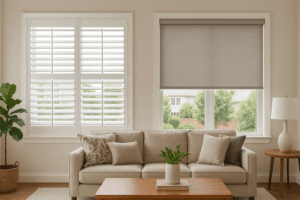
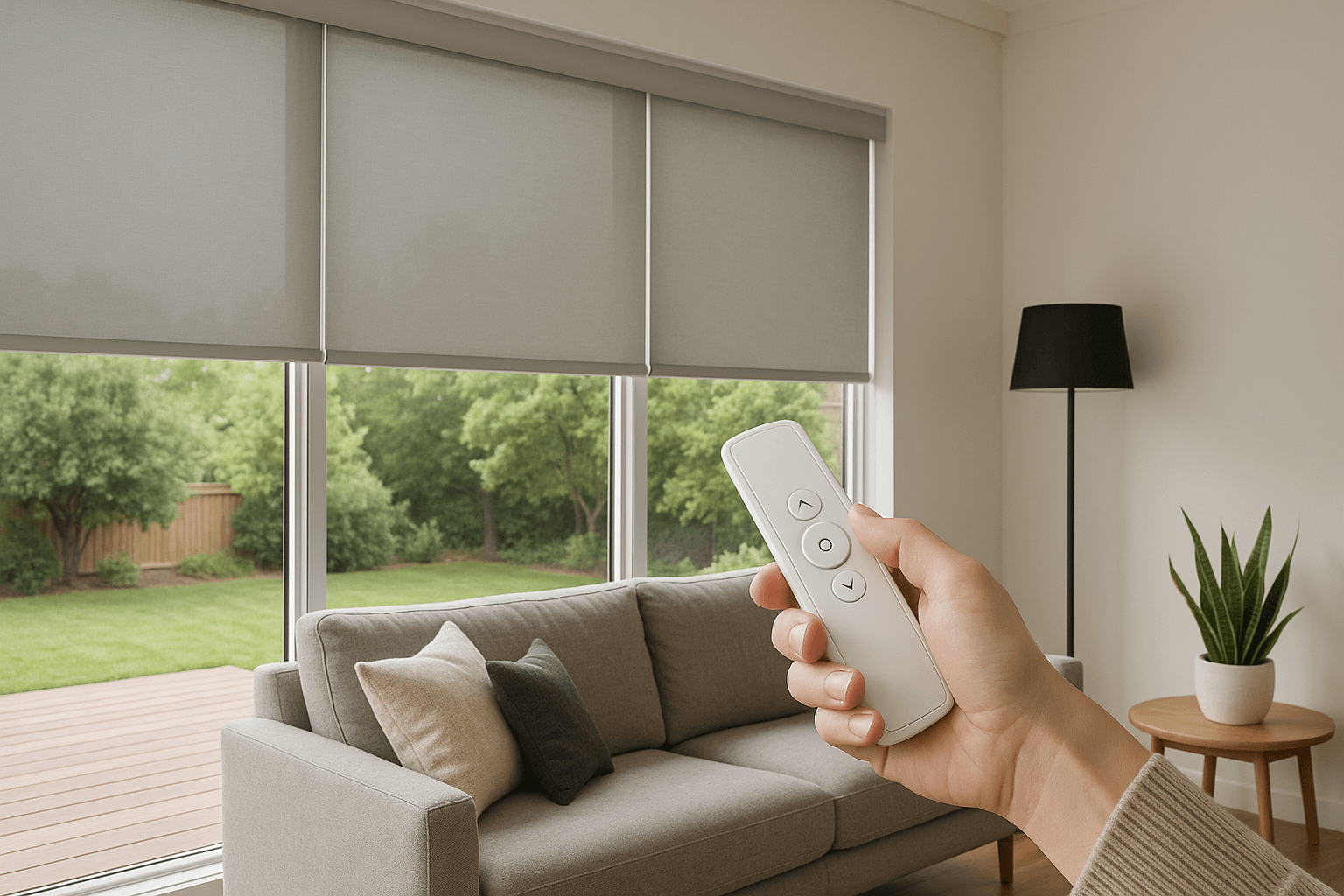
Living in Salt Lake City, you know the drill: the sun comes up over the Wasatch, flooding your living room with that gorgeous high-altitude light, but by 2 PM, your west-facing windows are turning your Home into a literal oven. It’s a constant battle between wanting to enjoy the view and needing to keep the heat (and the glare) at bay. That is exactly where Motorized Shades stop being a luxury and start feeling like a necessity.
So, What’s the Big Deal with Automation?
You might be thinking, “I can pull a cord just fine, thanks.” And sure, you can. But let’s be real for a second. How often do you actually adjust your blinds? Most people leave them in the same position for weeks because walking around to six different windows twice a day is a chore we just don’t do.
Motorized window treatments change the game because they take the human error (and laziness) out of the equation. It’s about comfort, sure, but it’s also about protecting your furniture from UV damage and managing your home’s temperature without lifting a finger.
Here’s the thing: when we talk about automation, we aren’t just talking about a remote control. We are talking about shades that know when the sun rises and sets. We’re talking about integration. It’s the difference between a flip phone and a smartphone. One makes calls; the other runs your life.
The Energy Efficiency Equation
Let’s talk about the weather here in Utah. We get the extremes. Blistering dry heat in July and freezing inversions in January. Your windows are the weakest link in your home’s insulation envelope—basically, they are where you lose money.
Automated shades act as a dynamic barrier. In the summer, you can schedule them to lower automatically during the hottest part of the day, reflecting solar energy before it heats up your drywall and carpet. In the winter, they can raise to let the sun warm your floors, then close at night to trap that heat inside.
This is where the industry term “R-value” comes into play. It measures resistance to heat flow. A standard double-pane window has a relatively low R-value. Add a cellular shade (those honeycomb-looking ones) that drops automatically when the temperature dips? You’ve just significantly boosted your home’s insulation. You aren’t just buying window coverings; you’re buying lower utility bills.
Hardwired, Battery, or Solar? Picking Your Power
This is usually the first technical hurdle homeowners run into. How do we actually power these things? It really depends on your current situation—whether you are building a new home in Draper or renovating a bungalow in Sugar House.
1. Hardwired (Low Voltage)
If you are in the framing stage of a new build or a major remodel, hardwired shades are the gold standard. We run CAT5 or specific low-voltage wire to the window header.
- The Pro: You never, ever have to change a battery. They are reliable and quiet.
- The Con: If your drywall is already up, this gets expensive and messy fast.
2. Battery Powered
Honestly, battery Technology has come a long way. We aren’t talking about shoving AA batteries into a plastic tube anymore. Most modern motorized roller shades use rechargeable Lithium-Ion wands that hide inside the roller tube.
- The Pro: Great for retrofitting. No wires, no electrician, no drywall patches.
- The Con: You do have to charge them. Usually, it’s once a year, depending on usage. It’s a minor inconvenience, but it’s there.
3. Solar Charging
This sounds perfect on paper, doesn’t it? Free energy! And for some windows, it is. A small solar panel sits behind the shade against the glass.
- The Catch: It needs direct sunlight. If you have a north-facing window or a big tree outside, that panel won’t generate enough juice to lift a heavy shade. It’s situational.
Fabrics and “Openness Factors”
Okay, this is where people get overwhelmed. You look at a swatch book and see 50 shades of grey (pun intended). But beyond color, you need to look at the openness factor. This is a percentage that tells you how tight the weave is.
| Openness Factor | Best Use Case | The Vibe |
|---|---|---|
| 1% Openness | Bedrooms / TV Rooms | Blocks almost all UV rays. Hard to see out, hard to see in. Privacy focused. |
| 3% – 5% Openness | Living Rooms / Kitchens | The sweet spot. You keep your view of the mountains, but cut the glare on your laptop. |
| 10% + Openness | Sunrooms | Very sheer. Lots of light, minimal privacy. Basically just takes the “edge” off the sun. |
And then you have Blackout Fabrics. If you are a light sleeper or have a dedicated home theater, you want Blackout. Light leakage is the enemy here. Professionals will often recommend “side channels”—aluminum tracks on the sides of the window—to prevent that annoying halo of light from creeping in around the edges.
The Smart Home Ecosystem
You know what’s cool? Telling your house “Goodnight” and watching every shade lower, the doors lock, and the lights dim simultaneously.
PowerShades and other high-end motorization Options are designed to play nice with the big boys: Control4, Savant, Crestron, Josh.ai, and yes, even Alexa and Google Home.
This isn’t just about showing off to your neighbors (though that’s fun too). It’s about scene integration.
- “Movie Mode”: Blackout shades drop, lights fade.
- “Morning Mode”: Bedroom shades rise 50% to wake you up gently with natural light instead of a blaring alarm.
- “Vacation Mode”: Your shades move randomly throughout the day to make it look like someone is home. That is a security feature most people don’t think about.
Styles: It’s Not Just Roller Shades
When people hear “motorized,” they picture those flat, commercial-looking roller shades. And while solar roller shades are incredibly popular for that modern, clean aesthetic, they aren’t the only game in town.
Roman Shades
These give you that soft, drapery feel with the convenience of a motor. They fold up as they rise. They add texture and warmth to a room that rollers sometimes lack.
Drapery Tracks
Yes, you can motorize actual curtains. A motorized drapery track allows you to have heavy velvet theater curtains that glide open at the touch of a button. It adds a level of elegance and drama that is hard to beat.
Zebra Shades (Transitional Shades)
These are trendy right now. It’s a loop of fabric with alternating sheer and solid bands. You can align them to see out, or offset them for privacy. Motorizing them creates a really mesmerizing effect as the bands bypass each other.
The Installation Reality: DIY vs. Pro
Look, I get it. You can buy Motorized Shades online. They ship them in a box, and you hope they fit. But window frames—especially in older Salt Lake homes—are rarely perfectly square.
If a window frame is “out of square” by even a quarter-inch, a standardized shade will telescoping (roll up crooked) or scrape the sides.
Professional installation involves laser measuring. We measure the top, middle, and bottom of the window opening because they are often different widths. We assess the “mounting depth”—do you have enough wood to actually screw the bracket into?
There is also the programming aspect. Setting the “limits” (where the shade stops at the top and bottom) can be tedious if you don’t know the motor protocol. If you set the upper limit too high, the bottom bar sucks up into the cassette and gets stuck. If you set the lower limit too low, the fabric piles up on the window sill.
Hiring a pro means you aren’t standing on a ladder swearing at a piece of aluminum on a Saturday afternoon.
Commercial Applications: Not Just for Homes
We do a lot of work with businesses in the valley. Think about a conference room with a projector. You cannot have a productive meeting if half the table is squinting from glare.
For restaurants, it’s about customer comfort. No one wants to sit at the “hot table” where the sun is beaming directly into their eyes. Automated solar shades allow businesses to keep the view (which is often why people are there) while controlling the environment.
Plus, from a facilities management standpoint, automating shades saves on HVAC costs. In a large office building, that cooling load reduction is massive.
Safety and Durability
Here is a sobering thought: corded blinds are a legitimate hazard for pets and small children. The CPSC (Consumer Product Safety Commission) has practically declared war on dangling cords, and for good reason.
Motorized shades are inherently cordless. There is nothing to get tangled in. It creates a cleaner look, sure, but primarily, it creates a safer home.
Durability is another factor. When you pull a manual shade, you are putting torque on the mechanism. Sometimes you pull too hard, or at a weird angle. We’ve all seen blinds that hang crooked because the string mechanism gave out. Motors operate with smooth, consistent torque every single time. They extend the life of the hardware because they don’t yank or twist.
The Cost Discussion
Let’s address the elephant in the room. Motorized shades are an investment. They cost more than the blinds you buy at a big-box store. You are paying for the motor, the technology, the custom fabric, and the labor.
However, think about value vs. cost.
- Energy Savings: Lower utility bills over time.
- Furniture Protection: Replacing a faded hardwood floor or a sun-bleached leather sofa is way more expensive than shades.
- Resale Value: In a competitive real estate market, “smart home features” are a selling point.
It’s like buying a good mattress or quality tires. You use them every single day.
Why Utah Homes Present Unique Challenges
Building in the mountains or the high desert presents unique challenges for window coverings.
The View vs. The Sun
If you live on the East Bench, your view is West. That means you get the sunset, which is beautiful, but you also get the harshest late-day sun. You need a high-performance solar fabric, likely a dark color. Counter-intuitively, dark fabrics offer better view-through than light fabrics because they absorb glare rather than reflecting it.
The Dry Air
Static can be an issue with certain cheap fabrics. We use materials designed to be anti-static so they don’t attract dust like a magnet.
The Large Windows
Modern architecture in Park City and SLC favors massive walls of glass. Moving a shade that is 12 feet wide by 10 feet tall manually is heavy. A motor makes it weightless.
A Note on Maintenance
You might worry that adding motors means adding maintenance. Honestly? Not really.
If you go with battery-powered units, you’ll need to charge them. Most use a magnetic charging port now—you just snap the cable on like a MagSafe charger. No climbing ladders to swap batteries.
Dusting? A feather duster or a vacuum with a brush attachment works fine. The fabrics are usually treated to repel dust.
The motors themselves are sealed units. They don’t need oiling or greasing. If you buy from a reputable manufacturer (like PowerShades), the warranty covers the motor for years.
Troubleshooting Common Issues
Even the best systems have hiccups. Usually, it’s a Wi-Fi issue. If you have a smart hub controlling your shades, it needs a decent signal. If your router is in the basement and your shades are on the second floor, you might see a delay.
This is why we often use proprietary communication protocols (like Zigbee or Radio Frequency) that create a “mesh network.” Basically, each shade acts as a repeater for the signal, making the network stronger the more devices you have. It’s techy, but it works.
Another common “issue” is channel assignment. You grab the remote, press “down,” and all the shades move when you only wanted one. That’s just a quick reprogramming fix on the remote channels. It’s simple once you know how.
Integration with Lighting Design
Shades are effectively “natural light dimmers.”
Designers treat window treatments as part of the lighting plan. During the day, the sun provides ambient light. As the sun sets, the shades lower, and your interior recessed lighting ramps up.
Balancing these two light sources is an art form. With dual roller shades, you can have the best of both worlds. A dual bracket holds two rolls: one solar shade for the day (glare reduction) and one blackout shade for the night (privacy). It’s the ultimate flexibility.
Final Thoughts on Aesthetic
Let’s not forget, these things look incredible. There are no strings dangling. No plastic wands. Just a clean line of fabric that disappears into a valance or pocket when not in use.
You can choose “fascias” (the metal cover at the top) in square or round profiles, wrapped in fabric or finished in brushed aluminum. You can have “hemless” bottom bars for a minimalist look. The customization options are endless.
Whether you lean towards the industrial chic of a downtown loft or the warm traditionalism of a Millcreek rambler, there is a fabric and style that fits.
Ready to Transform Your Home?
There is a lot to consider, from motor types to fabric opacity, but you don’t have to figure it out alone. At PowerShades Utah, we specialize in navigating these details to find the perfect solution for your specific windows and lifestyle.
If you’re tired of fighting the glare or just want to see what automation can do for your home, give us a call at 801-518-5242 to chat with an expert. You can also Request A Free Quote online to get started on your project today.