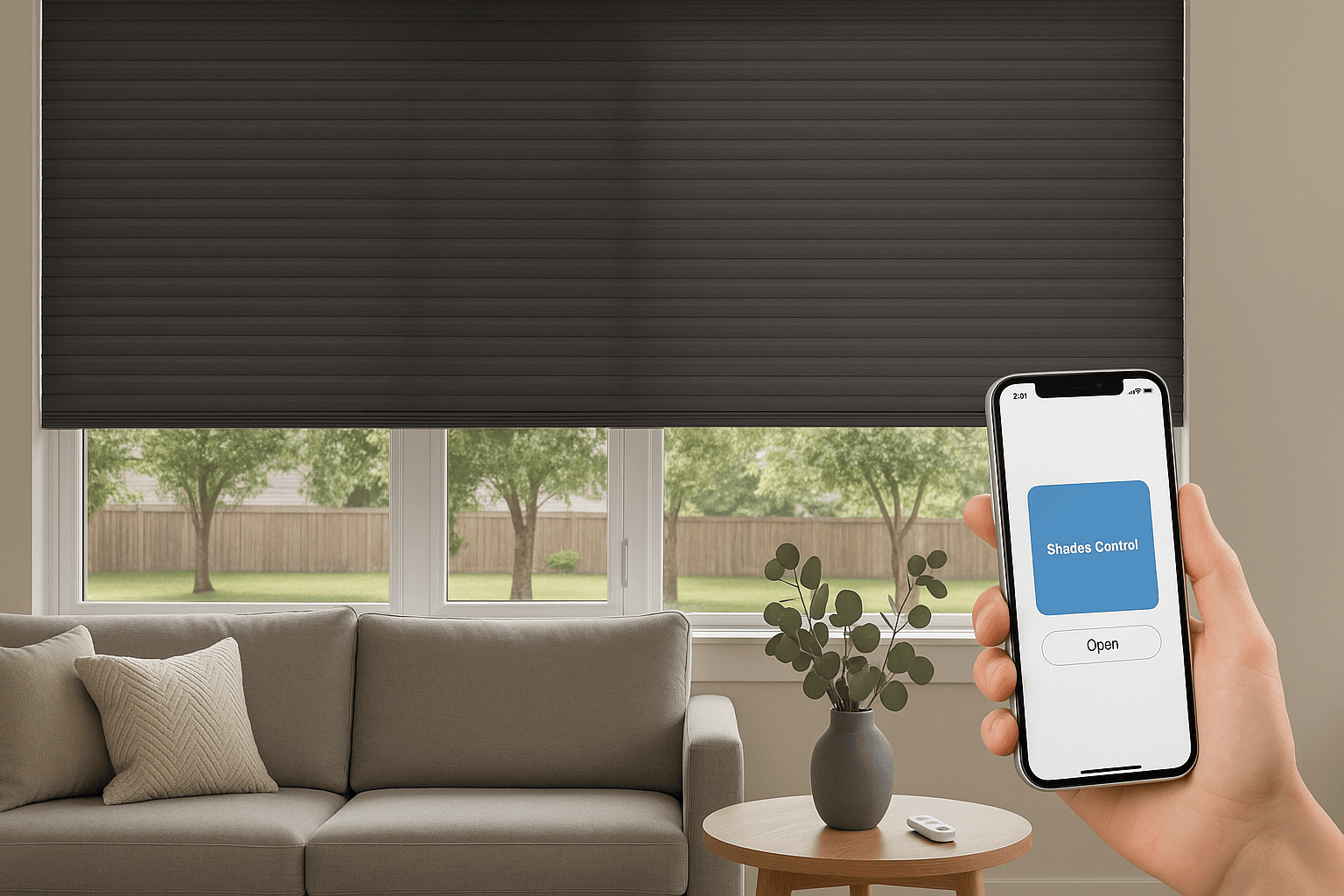
Living in Salt Lake City comes with a specific set of perks—specifically, those stunning views of the Wasatch Front and the Oquirrhs. But let’s be honest for a second: that same sun that lights up the mountains can turn your living room into a greenhouse by noon and create a glare on your TV that makes watching the game impossible. It’s a constant battle between enjoying the view and keeping your Home comfortable.
So, What’s the Deal with Smart Shades in 2024?
You might be thinking that window coverings haven’t changed much in fifty years. You pull a string, they go up; you pull it the other way, they go down. Simple, right? Well, yes and no. While the basic concept is the same, the Technology driving window treatments has completely shifted gears. We aren’t just talking about a remote control anymore; we are talking about shades that actually think.
In 2024, the best smart shades don’t just respond to a button press. They respond to the sun itself.
If you’ve been looking into upgrading your home, you’ve probably noticed that “smart home” isn’t just a buzzword anymore—it’s the standard. But here is the thing: a lot of people treat Motorized Shades as an afterthought, something to tack on after the paint is dry. Ideally, you want to think about this earlier because the difference between a battery-powered retrofit and a hardwired system is night and day.
The Shift to Power Over Ethernet (PoE)
Let me get a little technical for a moment—don’t worry, I’ll keep it plain English. For years, if you wanted Motorized Shades, you had two main choices: high-voltage AC power (which required an electrician) or batteries (which required you to grab a ladder every year or so).
Now, the industry standard is shifting rapidly toward Power Over Ethernet (PoE).
This is the same cable that runs your internet. It carries both power and data in a single, thin wire. Why does this matter for a homeowner in Sandy or a business in Downtown SLC? Reliability. A PoE motor is significantly quieter, perfectly synchronized, and never runs out of juice. Plus, because it’s hardwired to your network, the response time is instant. You press “Movie Mode” on your phone, and the shades drop immediately—no lag, no missed signals.
Styles That Are Winning This Year
Okay, the motor is the engine, but the fabric is the bodywork. It’s what you actually have to look at every day. Trends in 2024 have moved away from heavy, ornate drapes and toward clean, architectural lines that disappear when you don’t need them.
The Solar Roller Shade
This is the heavy hitter for Salt Lake City homes. A solar shade is designed to cut the glare and heat but—and this is the best part—keep the view. It’s made of a mesh weave. The tightness of that weave (called the “openness factor”) dictates how much you see out.
If you have a west-facing window getting hammered by that afternoon sun, a 1% or 3% openness factor blocks the heat but still lets you see the silhouette of the mountains. It feels open, airy, and modern.
The Dual Roller (Day & Night)
Sometimes you can’t decide. You want the view during the day, but you want total privacy (and darkness) at night. You know what I mean? Maybe it’s a bedroom where you need to sleep in on Saturday, or a media room where any light ruins the projector image.
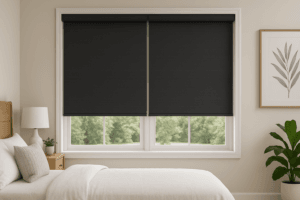
Dual roller shades are the answer. Two rolls of fabric sit in one compact cassette. One is your solar screen for the day; the other is a Blackout fabric for the night. It used to be that these systems were bulky and ugly, sticking way out into the room. The new hardware coming out this year is sleek. You barely notice it’s there until you need it.
Cellular Shades for Efficiency
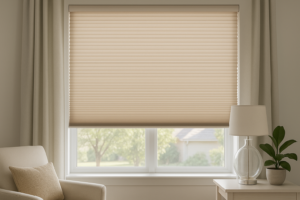
We can’t talk about Utah without talking about the weather. We get the heat, and we get the freezing inversion days. Cellular shades (or honeycomb shades) are the workhorses of energy efficiency. Their structure creates air pockets that act as a thermal barrier.
If your primary goal is lowering that heating bill in January or the AC bill in July, this is often the route to take. And yes, they can be fully automated now, too.
Comparing the Power Options
It helps to see it laid out. When you are looking for a quote, you’ll be asked how you want to power these things.
| Feature | Battery Powered | DC Low Voltage (wired) | PoE (Power over Ethernet) |
|---|---|---|---|
| Installation | Easiest (Retrofit friendly) | Moderate (Requires wiring) | Moderate (Requires CAT5/6) |
| Maintenance | High (Charging/Replacing) | None | None |
| Reliability | Good (Dependent on signal) | Excellent | Superior (Data + Power) |
| Cost | Lower upfront | Mid-range | Higher upfront, lower long-term |
| Best For | Existing homes, hard-to-reach spots | New builds, renovations | Smart homes, high integration |
Automation vs. Control: There is a Difference
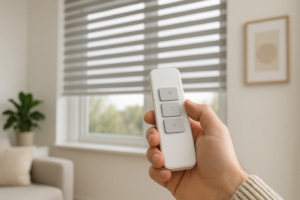
Here is where people often get confused. Control is having a remote or an app on your phone. You see the sun glare, you pick up your phone, you lower the shade. That’s cool, but it’s still manual labor, technically.
Home automation is when the house takes care of itself.
Imagine this scenario: It’s July. The sun starts hitting your east windows at 6:30 AM. Instead of waking you up or heating up the kitchen, your shades automatically lower to a preset level to block the direct rays while still letting in morning light. As the sun moves across the sky to the south, the east shades raise, and the south shades lower.
This is called automated sun tracking, and it is a game-changer for energy efficiency.
By connecting your shades to a system like Control4, Josh.ai, or even simpler hubs, the shades know the date, time, and your geographic location. They know exactly where the sun is relative to your window. You don’t have to lift a finger. The house stays cool, your furniture is protected from UV fading, and you just live your life.
Commercial Spaces: It’s Not Just for Homes
We talk a lot about homes, but if you run a business in the valley, you know the struggle of glare on computer screens. Productivity nosedives when employees are squinting or trying to tape cardboard over a window (we’ve all seen it).
For commercial applications, motorized roller shades are becoming standard spec.
Boardrooms are a prime example. You walk in for a presentation. You shouldn’t have to fumble with cords or walk around the room pulling chains. One tap on a touch panel, the lights dim, the shades drop, and the projector turns on. It impresses clients, sure, but mostly it just makes the meeting run smoother.
Also, consider the energy savings for a large building. If you can automate the shading to reduce solar heat gain by even 20%, the load on your HVAC system drops significantly. Over a five-year lease, that hardware pays for itself.
The “DIY” Temptation vs. Professional Install
I get it. You can hop online and order a motorized shade from a big-box retailer. It shows up in a box, and you borrow a drill.
But here is the thing about windows—they are rarely perfectly square. especially in older homes in the Avenues or Sugar House. If you measure the top width and order that size, but the window frame bows in slightly at the bottom, your shade is going to get stuck. Or, if you don’t account for the “fabric deduction” (the gap between the fabric and the bracket), you end up with light gaps that look cheap and let that laser-beam of sunlight hit you right in the eye.
Professional installation isn’t just about screwing brackets into the wall. It’s about:
- Precision Measuring: using lasers to find the variances in the window frame.
- Programming: Setting the upper and lower limits so the motor doesn’t burn out trying to pull the shade through the ceiling.
- Network Integration: Ensuring the shades actually talk to your WiFi or home automation system without dropping offline every Tuesday.
Plus, when you work with a local dealer, you have someone to call if something goes weird. Troubleshooting a motor over a chat bot with a company overseas is nobody’s idea of a fun Saturday.
Why PowerShades?
Since we are discussing the best of 2024, we have to mention the hardware itself. The reason we stand behind PowerShades involves that PoE technology I mentioned earlier. Many competitors are still retrofitting old motor designs to work with smart homes. PowerShades was built for the smart home.
They offer a level of cloud-based management that is frankly superior. If you call us saying, “Hey, the shade in the master bedroom is stopping three inches too high,” we can often log into the dashboard remotely and adjust the limit without even coming to your house. That is the level of service and convenience modern technology should provide.
Also, the customization options are wild. You can print custom images on the shades, match specific pantone colors, or choose from high-performance textiles that are rated for commercial fire safety and heavy UV exposure.
A Note on “Smart” Ecosystems
You probably already have a digital assistant. Maybe it’s Alexa, maybe it’s Google, or maybe you are deep in the Apple HomeKit ecosystem.
The best smart shades play nice with everyone. You don’t want a system that forces you to use their specific app for everything. You want to be able to say, “Alexa, turn on Movie Time,” and have the shades respond along with the lights.
When we design a solution for a Salt Lake City smart home, we look at what you already use. If you are a Control4 household, we use drivers that offer two-way feedback. This means your touch panel shows you exactly where the shade is positioned (e.g., 50% open), rather than just guessing. It’s these little details that make the system feel premium.
The “View Preservation” Factor
I want to circle back to the view because, let’s face it, that’s why we live here. A common misconception is that to block heat, you have to block light. That used to be true.
Modern technical Fabrics use bi-color weaves. Imagine a fabric that is white on the outside (facing the street) to reflect the sun’s heat, but darker on the inside (facing the room). Why darker on the inside? Because dark colors absorb light rather than reflecting it. This actually absorbs the glare and allows your eye to focus through the shade to the view outside.
It sounds counter-intuitive, but a black or charcoal solar shade actually gives you a better view of the mountains than a white one, which can create a “cloudy” effect when the sun hits it. This is the kind of nuance that a window treatment expert can help you navigate.
Is It Worth the Investment?
Look, motorized shades are an investment. They cost more than the plastic blinds you pick up off the shelf. But when you factor in the energy savings, the protection of your hardwood floors and furniture from UV damage, and the sheer convenience of automated living, the value proposition is strong.
There is also the resale value. Smart home features are high on the list for buyers in Utah right now. A fully integrated, hardwired shading system is a permanent asset to the home, much like a high-end lighting system or upgraded HVAC.
Getting Started
If you are tired of running around the house every evening to close blinds, or if you have high windows that you can’t even reach, it’s time to look at automation. 2024 has brought us quieter motors, smarter software, and better fabrics than we’ve ever seen.
Whether you are building a new modern home in Park City, renovating a bungalow in Millcreek, or upgrading an office downtown, there is a solution that fits the space. Don’t let the sun dictate how you use your rooms.
Take control of your light, your privacy, and your views. We can walk you through the fabrics, show you the motor options, and design a system that works for your specific lifestyle.
Give us a call at by phone # 801-518-5242 to chat about your project. Alternatively, you can Request A Free Quote online, and we will come out to measure your windows and give you a clear idea of what’s possible.