Living in Salt Lake City means dealing with a sun that feels just a little bit brighter and a winter glare that’s surprisingly intense, doesn’t it? You love the mountains, but you probably don’t love what those UV rays are doing to your hardwood floors or your energy bill. Let’s talk about fixing that without ruining your view of the Wasatch Front.
Why Your Windows Need Better Clothes
Here’s the thing about windows—they are technically just holes in your wall filled with glass. And while glass is great for seeing outside, it’s terrible at insulation. In the industry, we talk a lot about R-value and solar heat gain, but honestly? You just want to know why your living room feels like a sauna in July.
When you have standard blinds—the ones with the cords that always get tangled—you’re mostly just blocking light. You aren’t necessarily stopping the heat transfer. A high-quality residential shading solution acts like a shield. It reflects the sun’s intensity back out before it can heat up the air inside your Home.
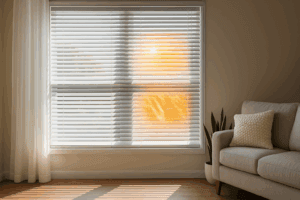
You know what? It’s not just about temperature. It’s about protecting your stuff. Have you ever moved a rug and noticed the floor underneath is a completely different color? That’s UV damage. It happens slowly, day by day, until suddenly your expensive leather sofa looks ten years older than it is. Good shades stop that. They act like sunscreen for your house.
The Magic of Motorized Roller Shades
Let’s be real for a second. If you have to walk around your house and manually pull down twelve different shades every evening, you probably won’t do it. You’ll leave them up, get annoyed by the glare on the TV, or leave them down and live like a vampire.
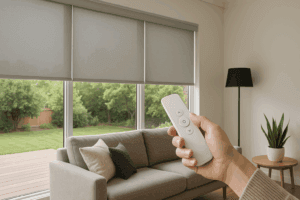
This is where motorized roller shades change the game.
It sounds like a luxury, and maybe ten years ago it was, but today? It’s almost a necessity for a modern home, especially with the tall windows we’re seeing in new builds around Draper and Park City. PowerShades offers systems that just work. You push a button, or better yet, you don’t do anything at all. You set a schedule on your phone, and the shades lower themselves right when the afternoon sun hits that brutal angle.
Power Options: Batteries vs. Hardwired
People always ask me, “Do I need to tear up my drywall to get Motorized Shades?”
The short answer: No.
Battery-operated shades have come a long way. We aren’t talking about swapping out AAs every month. These are high-torque, rechargeable beasts that can last anywhere from 6 to 12 months on a single charge, depending on how often you play with them. It’s a clean look, no wires, and perfect for retrofitting a home in Sugar House or the Avenues where fishing wire through lath and plaster is a nightmare.
However, if you are building new or doing a major remodel, hardwired (low voltage) is the gold standard. You never have to charge them. They just run, quietly and reliably, forever.
Let’s Talk About “The View” (Solar Shades)
There is a misconception that shades have to be all or nothing. Either you see the window, or you stare at a piece of fabric. Enter the solar shade.
These are engineered Fabrics woven with specific “openness factors.” It’s a fancy way of saying how many little holes are in the screen.
- 1% Openness: Very tight weave. Blocks almost all UV. Great for privacy, but hard to see through.
- 3% to 5% Openness: The sweet spot. You can see the mountains clearly, but nobody can really see in during the day. It cuts the glare on your computer screen without making the room dark.
- 10% Openness: Very sheer. Lets in a lot of light.
For most Salt Lake City homes, a 5% solar shade in the living room is the dream. You keep the natural light—which is good for your mood, by the way—but you cut the harshness. It’s like putting a high-quality pair of sunglasses on your house.
When You Need Darkness (Blackout Shades)
Then there are the bedrooms. Or the home theater.
Have you ever tried to sleep in on a Saturday, but the sun hits your east-facing window at 6:00 AM? It’s miserable. For these rooms, blackout shades are the only way to go.
But here is a little industry secret that not everyone tells you: Light gaps.
Because roller shades have brackets on the side, there is naturally a tiny gap between the fabric and the window frame. Physics is physics; the fabric can’t float. If you are super sensitive to light, or if you have a nursery where the baby needs total darkness to nap, we recommend adding side channels. These are sleek aluminum tracks that the fabric rides inside, blocking that annoying “halo” of light that sneaks in around the edges.
Dual Shades: The Best of Both Worlds
Can’t decide? You don’t have to.
Dual roller shades are exactly what they sound like. Two rolls of fabric on one window. Usually, you put a solar shade in the back (closest to the glass) and a Blackout shade in the front.
During the day, you drop the solar shade. You get your privacy and light control. Come nighttime, or when you want to watch a movie, you drop the blackout shade. It is a bit bulkier at the top of the window—you need a bigger valance to hide two rolls—but the functionality is unmatched. It gives you complete control over the environment.
Exterior Shading: Reclaiming Your Patio
We all know how Utah summers get. Dry, hot, and intense. You might have a beautiful patio, but between 4:00 PM and 7:00 PM, it’s basically a frying pan.
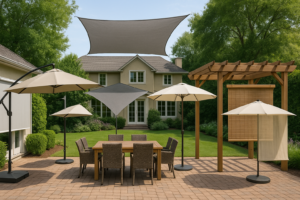
Exterior motorized screens are exploding in popularity right now. These aren’t just flimsy curtains. These are heavy-duty, wind-resistant shades that run on zipper tracks (like a really strong zipper holding the fabric in the side rails).
They do three things:
- Heat Control: They stop the sun before it hits the glass or the patio. This is actually the most efficient way to cool a house.
- Bug Protection: If you zipper them all the way down, you have an instant screened-in porch. No more mosquitoes or yellow jackets ruining dinner.
- Wind reduction: While they aren’t hurricane shutters, they cut down the breeze significantly, making it comfortable to sit outside even when the canyon winds pick up.
A Quick Comparison of Shade Types
Sometimes it helps to see it laid out. Here is a quick breakdown of what we usually recommend based on the room type.
| Room Type | Recommended Solution | Why? |
|---|---|---|
| Living Room | Motorized Solar Shades (5%) | Preserves the view, cuts glare on the TV, protects furniture from fading. |
| Bedroom | Blackout Roller Shades | Essential for sleep hygiene. Keeps streetlights and morning sun out. |
| Media / Theater | Blackout with Side Channels | Total darkness for the best picture quality. |
| Kitchen | Light Filtering / Translucent | Lets in a soft glow (privacy) but easy to wipe clean if splashes happen. |
| Patio | Exterior Zipper Screen | turns outdoor space into an extra room; bug and heat protection. |
Style Matters: Fascias, Cassettes, and Pockets
Okay, we’ve talked about the fabric and the motors, but what does the hardware look like? Nobody wants to see a metal tube with fabric wrapped around it unless you are going for a very specific industrial loft vibe (which, to be fair, looks cool in some downtown condos).
For most homes, we use a Fascia or a cassette.
- Square Fascia: Clean, sharp lines. Very modern. It snaps over the roller and hides the brackets.
- Curved Cassette: A softer look, often covered in matching fabric. Blends in a bit more with traditional decor.
- Recessed Pockets: This is the ultimate luxury. If you are building new, we can build a pocket into the ceiling. The shades disappear completely when they are up. It’s like magic.
You know what else matters? The bottom bar. It sounds silly, but a cheap plastic bottom bar ruins the look. We use weighted, hem-bar options that keep the fabric hanging straight and flat, free of wrinkles.
Smart Home Integration: “Alexa, Close the Blinds”
If you are into tech, this is the fun part. PowerShades integrates with almost everything.
Imagine this: You say, “Goodnight,” and your smart home system locks the doors, turns off the lights, and lowers every shade in the house. Or, in the winter, you set a scene where the south-facing shades open automatically when the sun is out to help heat the home (passive solar heating is a real money saver in Utah), and then close automatically when the sun goes down to trap that heat inside.
It connects with Amazon Alexa, Google Home, Samsung SmartThings, Control4, Josh.ai, and more. It’s not just about being flashy; it’s about energy efficiency happening in the background without you having to think about it.
The “Manual” Option (Because sometimes simpler is better)
I’ve been talking a lot about motors, but manual shades aren’t dead. In fact, for a guest room or a basement window you rarely touch, a manual chain shade is perfectly fine.
But please, stay away from the cheap spring-loaded ones that snap up and flap around like a angry bird. Modern chain-driven clutches are smooth. You pull the chain an inch, the shade moves an inch. It stays exactly where you put it. Plus, we have child-safe options now where the chain is anchored to the wall, so you don’t have to worry about little ones getting tangled.
Fabric Selection: It’s Not Just Grey and Beige
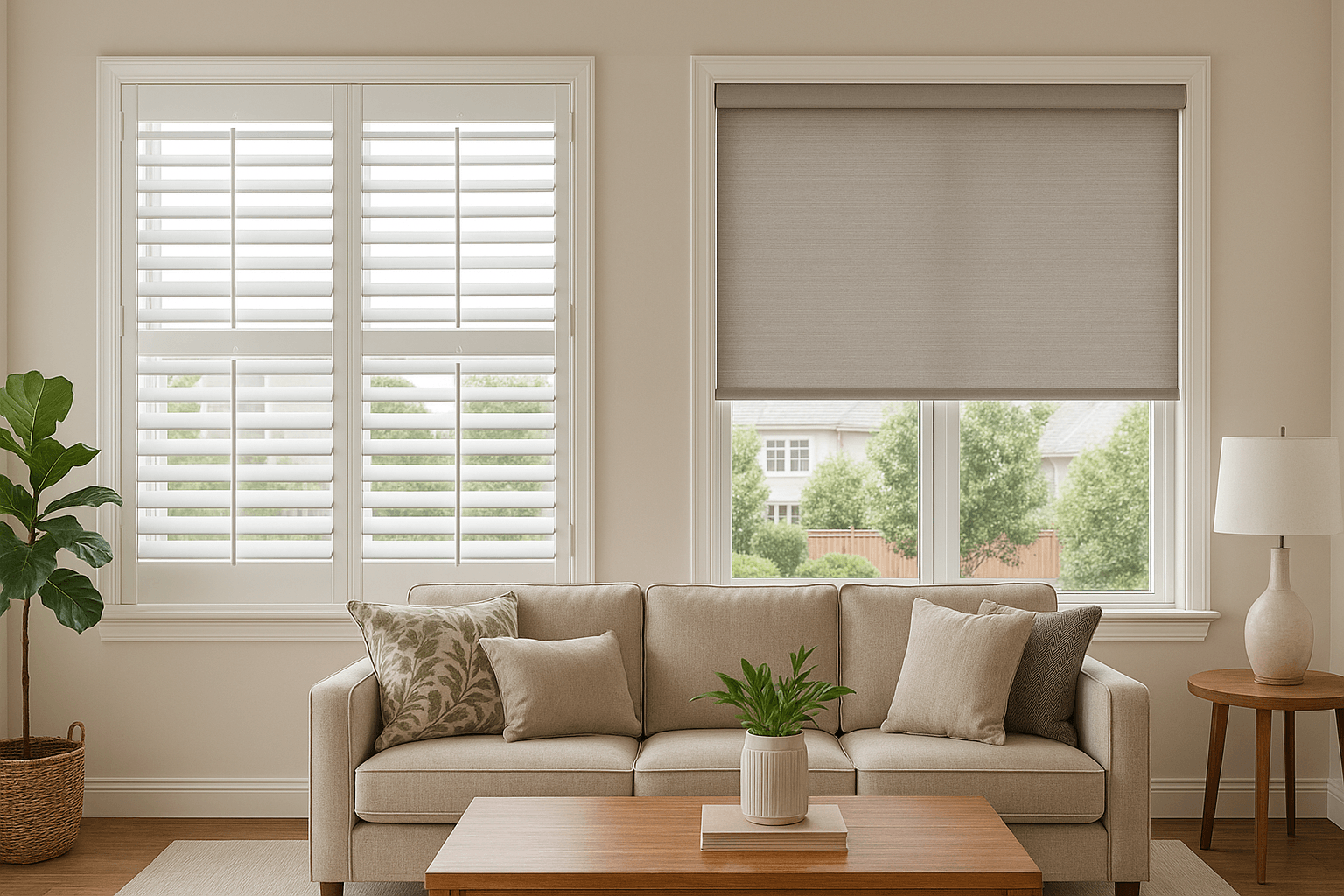
Though, let’s be honest, grey and beige are very popular for a reason—they match everything. But the texture plays a huge role.
We are seeing a move toward natural textures. Fabrics that look like linen or woven grass but have the durability and UV performance of synthetic materials. It adds warmth to a room. A flat, plastic-looking shade can feel a bit “office-like.” A textured weave makes it feel like a home.
And color impacts performance!
- Dark Fabrics: Better view through (believe it or not, dark reduces glare better), but they absorb more heat.
- Light Fabrics: Reflect more heat (better energy efficiency), but the glare can sometimes “wash out” the view slightly.
It’s a balancing act. That’s why we usually bring samples to your house. You have to hold the fabric up to your window, with your lighting, to really see how it behaves.
Why Professional Installation Beats DIY
Look, I know the temptation. You see something online, it looks cheap, and you think, “I can wield a drill.”
But window frames are rarely perfectly square. Especially in older homes. The drywall might bow out a quarter of an inch in the middle. If you order a shade that is 1/8th of an inch too wide, it won’t fit. If it’s too narrow, you have massive light gaps.
When you hire a pro, we measure to the millimeter. We adjust the “limit stops” on the motors so they align perfectly with the window sill. We make sure the tension is right so the fabric doesn’t “telescope” (roll up crooked) over time.
Plus, dealing with low-voltage wiring or programming RTS channels on a remote isn’t everyone’s idea of a fun Saturday afternoon. We get in, get it done, and clean up the dust.
Troubleshooting Common Shade Issues
Even the best systems have quirks. Here are a few things we tell homeowners to watch for:
- The “Telescoping” Shade: If your shade starts rolling up sideways like a cone, your window might not be level. A little piece of painter’s tape on the roller tube (on the side it’s drifting away from) usually levels it out.
- Remote not working: It’s almost always the battery in the remote, not the shade.
- Fabric wrinkles: Sometimes, if a shade has been rolled up for months, it needs to hang for a few days to “relax” and let gravity smooth it out.
The Utah Factor: Altitude and UV
I touched on this earlier, but it bears repeating. We are at roughly 4,300 feet (or higher if you are up on the bench). The atmosphere is thinner here than at sea level. That means UV radiation is stronger.
Standard big-box store blinds often yellow and crack after a few years of Salt Lake sun. PowerShades and the high-grade fabrics we use are rated for this. They are designed to take a beating from the sun and keep looking new. It’s an investment in the longevity of your home’s interior.
Also, think about the winter inversion. When it’s gloomy, you want as much light as possible. Motorized Shades make it easy to lift everything up and grab every photon of light available during those grey January days.
Getting Started with Your Project
So, where do you start?
First, look at your windows. Which direction do they face?
- North: consistent, cool light. Less need for heavy heat control.
- South: Constant sun all day. Needs heat management.
- East: Morning blast. Needs blackout in bedrooms.
- West: The “afternoon oven.” Needs heavy-duty solar shades or exterior screens.
Once you have an idea of what bothers you (Heat? Glare? Privacy?), it’s time to look at fabrics. Don’t stress about the mechanics yet; focus on the look and the problem you are solving.
Ready to Upgrade Your View?
Your home is your sanctuary, and you shouldn’t have to squint to enjoy it. Whether you need to block the heat on your patio or finally get a good night’s sleep without the streetlights creeping in, we have a solution that fits your style and budget.
Let’s get those windows dressed properly. You can reach PowerShades Utah directly at by phone # 801-518-5242 to chat about your project. Or, if you’re ready to see some options, go ahead and Request A Free Quote today—we’d love to help you find the perfect shade.