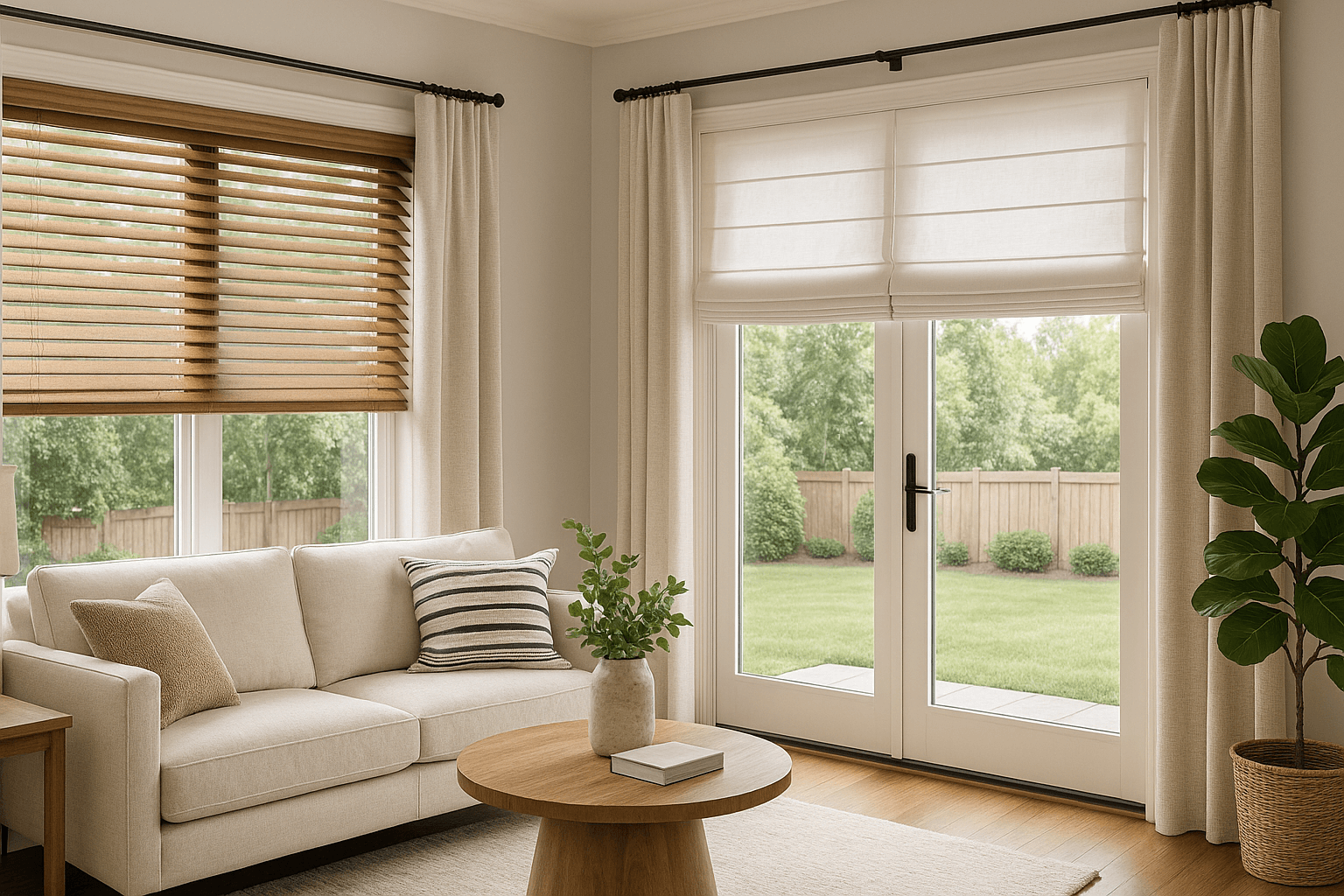
If you live along the Wasatch Front, you know that the sun hits a little differently here than it does in other parts of the country. Between the glaring reflection off the snow in winter and the intense high-altitude UV rays in July, finding the right window treatments is less about decoration and more about maintaining your sanity—and your utility bills. Let’s talk about what homeowners and businesses in Salt Lake City are actually installing this year and why the trends are shifting so heavily toward automation and efficiency.
Why 2024 is the Year of the “Smart” Window
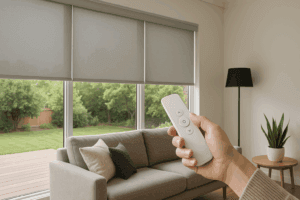
You know what? We used to look at motorized blinds like something out of a futuristic movie or a luxury reserved for the ultra-wealthy. But things have changed. Drastically. In 2024, motorized roller shades have effectively become the standard for modern homes, especially in tech-forward hubs like Salt Lake City.
Here’s the thing about manual shades: they rely on you actually getting up to adjust them. It sounds lazy to say that’s a burden, but be honest with yourself. If you have a south-facing window behind a sectional sofa, are you really climbing back there every day at 2:00 PM to cut the glare? Probably not. You just leave them closed, losing your view, or you leave them open and let the heat bake your furniture.
Smart automation fixes the human error part of the equation.
We are seeing a massive surge in Power over Ethernet (PoE) shades. I know that sounds like jargon, but it’s actually pretty simple. It means your shades are hardwired for both power and data using a single cable. No batteries to change, no spotty Wi-Fi signals dropping the connection. They just work. For new builds in Utah, this is becoming a non-negotiable spec.
But even for retrofits, the battery Technology has gotten so good that you might only need to charge them once a year. It changes the rhythm of your Home. Imagine your shades automatically rising at sunrise to help wake you up, then lowering halfway during the hottest part of the afternoon to protect your floors. That isn’t just convenience; it’s proactive home management.
The Battle Against the Utah Climate: Energy Efficiency
Let’s talk about the weather for a second. In Salt Lake, we have those weird temperature inversions and summers that feel like a convection oven. Your windows are the weakest link in your home’s insulation envelope. You could have the best HVAC system in the world, but if your glass is bleeding heat, you’re throwing money away.
This year, cellular shades (often called honeycomb shades) are getting a serious design refresh. Historically, they were a bit… boring. Practical, yes, but not exactly a style statement. Now, manufacturers are combining that incredible insulating structure—where the pockets of air trap heat—with richer textures and modern Fabrics.
However, the real winner for 2024 in terms of popularity is the solar shade.
Solar shades are interesting because they manage light without totally killing your view. We all pay a premium for views of the mountains, right? Why would you want to cover that up with a heavy drape? Solar Fabrics are woven with specific “openness factors”—usually between 1% and 10%.
- 1% Openness: Tight weave. Great for privacy and blocking heat, but harder to see through.
- 3% – 5% Openness: The sweet spot. You get significant UV protection, but your eye can still focus on the landscape outside.
- 10% Openness: More light comes in. Good for north-facing windows where heat isn’t a major issue.
By pairing a solar fabric with a motorized system, you get the best of both worlds. You keep the heat out during the day, but you keep the Wasatch Mountains in your sightline.
Layering: The “Soft Modern” Aesthetic
For a while, minimalism was everything. People wanted nothing on the windows but a sleek roller shade. While that stark look is still popular in commercial spaces, residential trends are softening up.
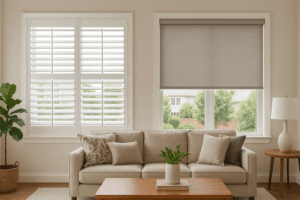
We are seeing a return to layering. This is where you take the high-tech functionality of a motorized shade and pair it with the softness of stationary drapery panels.
It solves a common problem. Roller shades, by nature, have a small “light gap” on the sides where the fabric roll sits in the bracket. It’s tiny, but for a light sleeper, that sliver of sunlight at 6:00 AM is annoying. By adding drapery panels on the sides, you cover that gap (we call it a light bleed) and add acoustic dampening to the room.
Plus, it just looks finished. A room with only hard surfaces—wood floors, drywall, glass windows, metal shade brackets—can feel a bit sterile. Adding a linen or velvet drapery layer brings warmth and texture that makes a house feel like a home. It’s about balancing that clean, modern tech with organic comfort.
Transparency and Opacity: A Quick Guide
Choosing the right fabric can be confusing because the terms get thrown around loosely. To help you figure out what you actually need for each room, here is a breakdown of how opacity works in real-world scenarios.
| Fabric Type | Best Room Application | Privacy Level | Light Control |
|---|---|---|---|
| Sheer | Living Rooms, Kitchens | Low (Silhouettes visible at night) | Softens harsh light, reduces glare slightly |
| Light Filtering | Bathrooms, Dining Areas | Moderate (Shadows visible, no details) | Glows with natural light but blocks direct sun |
| Blackout | Bedrooms, Media Rooms | High (Complete privacy) | Blocks 99-100% of incoming light |
Blackout shades are essential for bedrooms, but here is a pro tip: ensure you look for “side channels” if you want total darkness. Even the best Blackout fabric will let light halo around the edges if it’s just hanging there. Side channels are aluminum tracks that the shade fabric rides inside, sealing off that light leak. If you work night shifts or have a home theater setup, this is the only way to go.
The Commercial Perspective: Offices and Glare
If you run a business in Salt Lake City, you know the struggle of the afternoon sun hitting computer screens. It kills productivity. Employees are squinting, moving their monitors, or taping file folders to the window (we’ve all seen it).
For 2024, commercial trends are moving toward automated daylight harvesting.
This sounds fancy, but the concept is grounded in basic economics. Sensors detect how much natural light is hitting the building. If it’s bright outside, the lights in the office dim automatically, and the shades adjust to cut the glare. If a storm rolls in and it gets dark, the lights brighten, and the shades raise to let in free natural light.
It reduces the reliance on artificial lighting, which cuts the electricity bill, and it keeps the HVAC system from fighting the solar heat gain. But more importantly, it makes the office comfortable. Glare control is the number one request we get from business clients. They don’t want a dark cave; they just want to be able to read their screens.
Natural Materials and Texture
We are stepping away from the shiny, plastic-looking vinyls of the past. Even for roller shades, the demand is for fabrics that look and feel like fabric.
Woven woods and natural textures are huge right now. These aren’t the cheap bamboo blinds from a college apartment. These are refined, grass-cloth style weaves that bring an organic element into the space. The issue with natural materials used to be durability—they would dry out and crack in the Utah sun.
However, new synthetic blends mimic the look of natural grass or jute but possess the durability of a polyester blend. You get the aesthetic of a woven wood with the longevity of a performance fabric. It creates a nice contrast, especially in modern homes that feature a lot of concrete or steel.
Matte finishes are also dominating hardware choices. We are seeing less chrome and shiny aluminum. Instead, matte black, bronze, and brushed nickel fascias (the covering that hides the roller tube) are the standard. They disappear into the window frame rather than drawing attention to themselves.
Integrating with the Smart Ecosystem
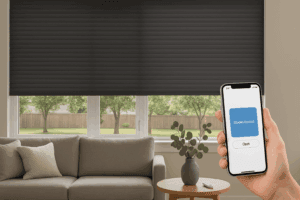
You probably have a voice assistant, whether it’s Alexa, Google Home, or a more robust system like Control4 or Josh.ai. Window treatments are now a critical part of that ecosystem.
In 2024, nobody wants an app for their lights, a different app for their thermostat, and a third app for their shades. Integration is key.
PowerShades excels here because the cloud-based dashboard allows for seamless communication between devices. You can set a scene called “Movie Night.” When you activate it:
- The lights dim to 20%.
- The thermostat drops two degrees.
- The blackout shades lower completely.
All of that happens with one voice command or button press. It’s not just about being flashy; it’s about accessibility. For elderly homeowners or those with mobility issues, being able to control privacy and light without physically reaching a cord is a massive quality-of-life improvement.
A Note on Safety: The End of Cords
We have to mention this because it is vital. The industry has effectively moved away from corded blinds entirely. In fact, safety regulations have made it increasingly difficult to even sell them—and for good reason. Cords are a strangulation hazard for children and pets.
If you have cords dangling in your windows right now, 2024 is the time to upgrade. Cordless lift systems or motorized solutions clean up the look of the window, sure, but mostly they provide peace of mind. You don’t realize how much visual clutter those strings add until they are gone. The window looks bigger, cleaner, and safer.
Customization is the New Standard
Off-the-shelf blinds from a big box store never really fit right. They are either an inch too narrow, letting light pour in, or too wide, scraping the paint off your window frame.
Custom manufacturing allows for precision that matters. We are talking about measurements down to the sixteenth of an inch. When a shade fits perfectly, it functions better. It rolls straighter, it insulates more effectively, and it lasts longer because it isn’t rubbing against the jambs.
Plus, customization allows for dual-shade systems. This is a setup where two rollers sit in one headrail. One is a solar shade for daytime use (view and UV protection), and the second is a blackout shade for night (privacy and darkness). It’s the ultimate window treatment, giving you total control over the environment regardless of the time of day.
Finding the Right Fit for Your Utah Home
Choosing window treatments can feel overwhelming because there are thousands of fabric choices. But it really comes down to how you live in the room.
If it’s a living room with a stunning view of the valley, go with a motorized solar shade. If it’s a nursery that gets hot in the afternoon, a cellular blackout shade is your best friend. If it’s a dining room where you want ambiance, layer a light-filtering roller shade with some heavy drapery.
The technology has finally caught up with the design. We don’t have to choose between “smart” and “beautiful” anymore. You can have a shade that talks to your thermostat, runs on solar power, and looks like a high-end designer fabric.
Upgrading your window treatments is one of the few home improvements that you interact with every single day. You see them when you wake up, you adjust them when you work, and you close them when you sleep. It’s worth getting it right.
If you are ready to see how automation can change the way you live in your home, or if you just need to cut the glare in your office, we are here to help you navigate these choices. You can reach the PowerShades Utah team directly by phone # 801-518-5242 to discuss your project. Alternatively, you can visit our website to Request A Free Quote, and we can show you exactly what these fabrics look like in your own light.