Living in Salt Lake City means we get the best of both worlds—gorgeous mountain views and a whole lot of sunshine. But honestly, figuring out how to manage that intense glare without feeling like you live in a dark cave can be incredibly frustrating. Let’s figure out how to pick the absolute best shade fabric for your Home or business.
Why Shade Fabric Matters More Than You Think
You might think buying window treatments is easy. You just pick a nice color, hang them up, and call it good. Right? Well, not exactly. The fabric you choose actually does a lot of heavy lifting for your space. It is not just about making a room look pretty, though that definitely matters. Shade fabric is your very first line of defense against the harsh Utah sun.
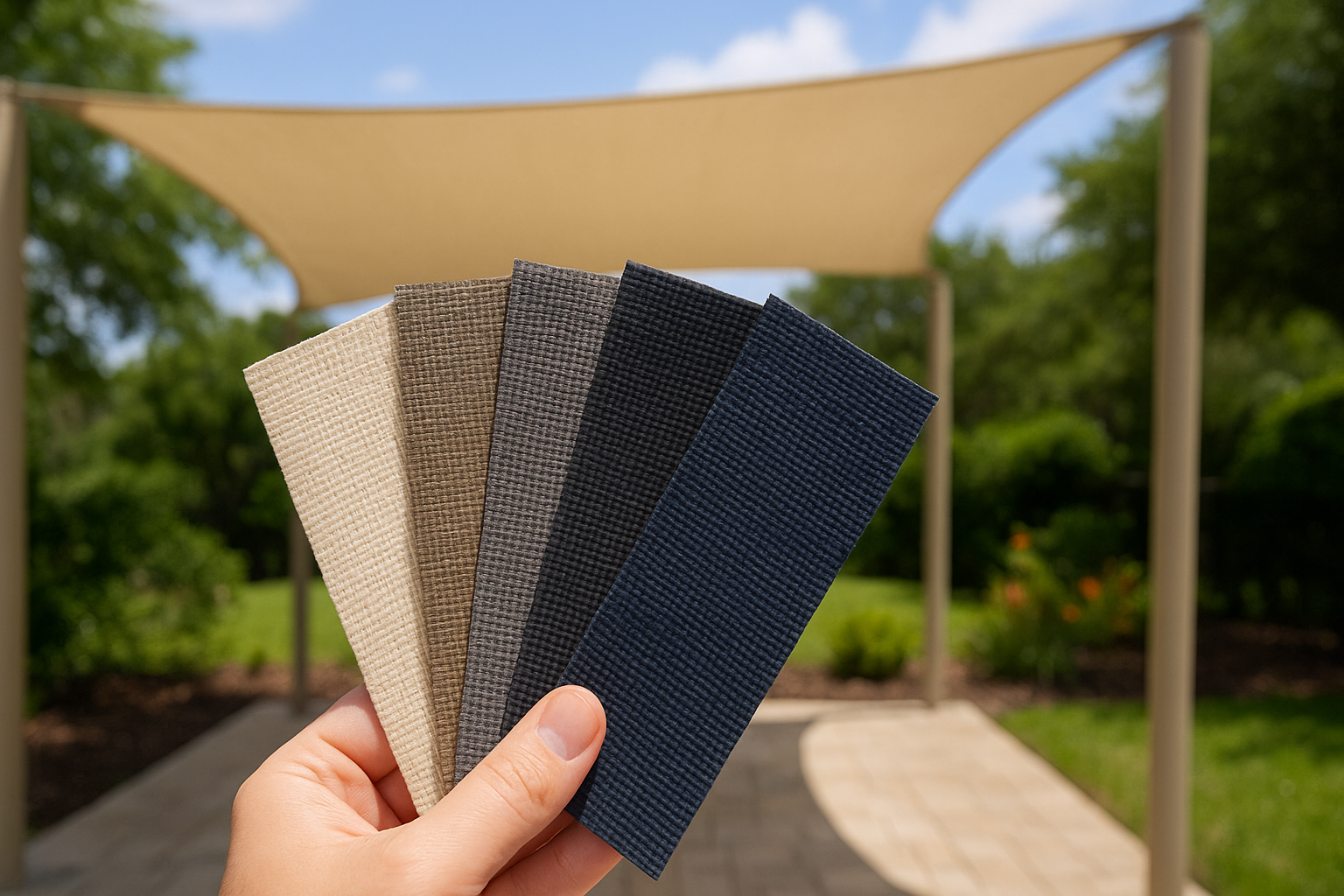
If you pick the wrong material, you might end up baking your living room. Or worse, fading your expensive hardwood floors and furniture. You know what? A lot of people just guess when looking at fabric swatches. They point at a nice gray texture and hope for the best. But there is actual science behind how these materials handle light and heat.
Every piece of fabric will absorb, reflect, or transmit sunlight. Window shade solutions are designed specifically to balance those three things. When you get that balance right, your air conditioning doesn’t have to work as hard. Your rooms feel more comfortable. You can actually watch TV without a blinding glare across the screen. Makes sense, right? Taking a few extra minutes to understand your fabric choices will save you a massive amount of headaches down the road.
Surviving the Salt Lake Weather Rollercoaster
Here is the thing about living along the Wasatch Front. Our weather is completely all over the place. We have boiling hot summer afternoons in August. Then, just a few months later, we deal with intense winter snow glare.
Have you ever noticed how bright your house gets after a fresh snowstorm in January? The sun bounces right off the white snow and shoots straight through your windows. It really is blinding. That double-dose of sunlight—from the sky and reflecting off the ground—requires a shade fabric that can handle extremes.
Because of our high elevation here in Salt Lake City, UV rays are much stronger than they are at sea level. This means UV protection isn’t just a luxury. It is totally essential. A good shade fabric will block out harmful UV rays before they ruin your upholstery. So, when you start shopping for shades, you need to think about the seasons. What works for a gentle spring morning might not hold up against the glaring afternoon sun in mid-July.
Understanding the “Openness Factor” Magic
Let me explain a term you will see everywhere when shopping for solar shades: the openness factor.
Picking a solar shade without checking the openness factor is like buying a pair of shoes without checking the size. It might look great on the shelf, but you will definitely regret it later. Openness factor simply refers to how tightly the fabric is woven together. It tells you exactly how much open space is in the material, which dictates how much light comes through.
Here is a quick breakdown of how these percentages work:
- 1% to 3% Openness: These are woven very tightly. They block almost all UV rays and offer extreme glare control. They are perfect for windows that get blasted by direct, harsh sunlight.
- 5% Openness: Honestly, this is the sweet spot for most residential and commercial spaces. It gives you great UV protection while still letting you see the mountains outside.
- 10% to 14% Openness: These Fabrics have a looser weave. They let in a lot of natural light and give you a fantastic view of the outdoors. However, they will not block as much heat.
If you have a home office facing west, you probably want a lower openness percentage. That way, you won’t be squinting at your computer screen all afternoon. On the flip side, if you have a north-facing patio door, a 10% shade lets you keep your beautiful view intact.
The Color Paradox: Light vs. Dark Fabrics
We need to talk about color. Most people assume that white or light-colored shades are the best choice for blocking the sun. It seems logical. White reflects heat, right?
Well, yes, but there is a catch. Mild contradiction here: dark fabrics are actually much better for reducing glare and preserving your view. Let me explain why.
Think of a dark shade fabric like a pair of polarized sunglasses for your windows. Dark colors absorb light. When the sun hits a black or charcoal shade, the fabric absorbs the brightness. This stops the light from bouncing around the room. Because there is no harsh reflection, your eyes can easily see straight through the tiny holes in the fabric to the scenery outside.
Light-colored fabrics do the exact opposite. They reflect the sun. While this is fantastic for keeping the heat out, it creates a bright, glowing halo effect on the shade itself. This glow makes it incredibly difficult to see through the fabric. Your view gets washed out.
So, what should you do? If keeping the room as cool as possible is your biggest goal, pick a light color. If you want to cut the glare and keep your view of the mountains, go with a dark color.
The Great Light Filtering vs. Blackout Debate
Wait, aren’t light filtering and Blackout shades basically the same thing? Actually, no. They serve completely different purposes. Let’s break down the main categories so you know exactly what you are getting.
| Fabric Category | Light Control Level | Best Room Application |
|---|---|---|
| Sheer / Solar | Soft glow, retains view outside | Living rooms, offices, dining rooms |
| Light Filtering | Diffuses harsh light, blocks view | Kitchens, bathrooms, hallways |
| Blackout / Opaque | Complete darkness, totally blocks view | Bedrooms, media rooms, nurseries |
Light filtering fabrics take harsh, direct sunlight and soften it. They scatter the light around the room, giving you a beautiful, warm glow. You cannot see through them, which means people outside cannot see in either. They are wonderful for living spaces where you want natural light but still need privacy.
Blackout Fabrics, on the other hand, are totally opaque. They stop light dead in its tracks. If you work night shifts and sleep during the day, or if you just want to build an awesome home theater, blackout fabric is your best friend.
The Nighttime Privacy Trap You Need to Avoid
Here is a fun little story. I was walking my dog through a neighborhood in Sugar House a few weeks ago. It was dark outside, maybe around 9 PM. I looked over at a house and could see right into their brightly lit living room. I saw their TV, their furniture, and the family eating dinner. They had solar shades pulled down, but they clearly did not understand how those shades work at night.
This is the nighttime privacy trap. Solar shades are essentially a one-way mirror. During the day, the sun is brighter outside than your lights are inside. So, you can see out, but neighbors cannot see in.
At night, the whole thing completely reverses. It is dark outside, and your interior lights are blazing. Suddenly, everyone on the sidewalk has a perfect view of your living room.
If you are picking fabric for a street-facing bedroom or bathroom, do not rely on solar shades alone. You will definitely want a privacy fabric, a light-filtering weave, or a blackout shade. You could also layer your window treatments, which we will talk about a little later.
Texture, Style, and Your Room’s Vibe
Let’s shift gears and talk about how the fabric actually feels. Texture changes everything about a room. You can have two fabrics in the exact same color, but if one is a smooth vinyl and the other is a woven linen, they will give off totally different vibes.
If you want a cozy, inviting living room, look for soft fabrics. Materials that mimic natural fibers like cotton, linen, or bamboo add incredible warmth to a space. They make a house feel like a home.
On the flip side, maybe you want a sleek, modern look. Smooth, tightly woven synthetic fabrics offer crisp, clean lines. They look fantastic in minimalist homes or modern downtown apartments. They do not draw too much attention to themselves, letting your furniture and art take center stage.
Take a moment to think about the mood you want to create. Are you going for rustic and earthy? Or clean and industrial? Your shade fabric plays a huge role in setting that tone.
What About Businesses and Commercial Spaces?
Choosing fabric for a business is a whole different ballgame. If you run an office, a restaurant, or a retail store here in Utah, your priorities change a bit.
For office buildings, glare control is usually the number one issue. You cannot have employees squinting at their monitors or moving their desks to avoid the afternoon sun. A dark-colored solar shade with a 3% or 5% openness factor works beautifully in corporate settings. It stops the glare completely, but still lets your team look outside and avoid feeling trapped in a box.
Durability is another massive factor for businesses. Commercial fabrics need to handle a lot of wear and tear. They get pulled up and down constantly. Sometimes people bump into them. You need heavily reinforced materials that resist fraying and fading. Many commercial shade fabrics also come with special fire-retardant certifications to meet local building codes.
Finally, think about energy costs. Big glass windows turn into ovens during the summer. By choosing a highly reflective fabric, you can bounce a huge chunk of that solar heat right back outside. That takes a massive load off your HVAC system. Lower cooling bills are always a win for any business owner.
Keeping Things Clean and Tidy
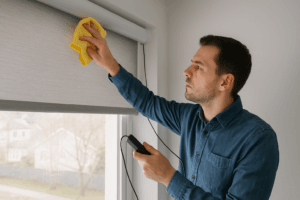
Nobody wants to spend their weekend scrubbing window blinds. Trust me on this one. When choosing a fabric, you really need to think about maintenance.
If you have a busy house with kids, dogs, and occasional coffee spills, you want something easy to clean. Smooth vinyl-coated fabrics are absolutely brilliant for this. If someone gets sticky fingerprints on the shade, you just take a damp cloth, wipe it down, and you are done. It takes five seconds.
Woven, natural-feeling fabrics are beautiful, but they trap dust a little more easily. You cannot just scrub them with a wet sponge. Usually, you need to use the brush attachment on your vacuum to gently lift the dust out of the fibers.
Think about where the shade is going. A fabric shade right above the kitchen sink might get splashed with soapy water or spaghetti sauce. In a spot like that, a smooth, moisture-resistant material will save your sanity. Keep the fancy, delicate weaves for the formal dining room or the master bedroom.
Layering Up: The Dual Shade Solution
What happens if you just cannot decide? What if you want a beautiful view during the day, but you also want total blackout privacy at night?
You do not actually have to compromise. This is where dual shades come into play. A dual shade system mounts two completely different fabrics on a single window. You get one sheer solar shade, and one heavy blackout shade.
During a sunny Utah afternoon, you roll down the solar fabric. It cuts the glare, protects your furniture, and lets you see the trees outside. Then, when the sun goes down and you want privacy, you simply roll down the blackout fabric right over it.
It is the perfect solution for bedrooms. You wake up, raise the blackout shade, and let the soft morning light filter in through the sheer layer. It really is the ultimate setup for managing light around the clock.
Tying It Together with Motorization Magic
Once you find the perfect fabric, you have to think about how you will operate it. Honestly, you could have the most beautiful fabric in the world, but if the shades are heavy and hard to reach, you will probably never use them.
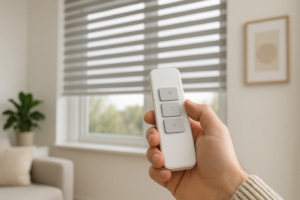
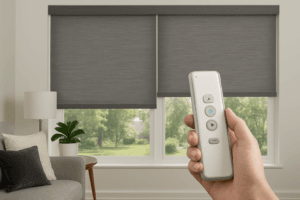
This is where automated Motorized Shades step in. Instead of wrestling with messy cords, you just tap a button on your phone or use a remote control. The fabric glides down perfectly smooth every single time.
If you want to get really fancy, you can put your shades on a schedule. Imagine your blackout shades automatically rising at 7:00 AM to gently wake you up. Or your living room shades rolling down right at 4:00 PM to block the intense afternoon heat. By automating the process, your beautiful new shade fabric does its job perfectly without you having to lift a finger.
Ready to Upgrade Your Space?
Ultimately, finding the right window treatment comes down to understanding your space, your light, and your daily habits. Whether you need an easy-to-clean solar fabric for a busy office or a plush, textured light-filtering weave for your family room, taking the time to match the material to the room makes all the difference. You deserve a space that looks fantastic and feels completely comfortable all year long.
If you are tired of fighting the glaring sun or simply want to refresh the look of your home, our team at PowerShades Utah is here to help you navigate all these fabric choices. Feel free to reach out to us by phone # 801-518-5242 or Request A Free Quote online to get started. Let’s find the exact combination of style and performance to make your windows look absolutely incredible.