Have you ever stared at your living room windows as the blinding afternoon sun cooks your sofa and thought, “There has to be a better way to deal with this?” Honestly, if you live around here, you probably have. We get asked all the time if smart blinds in Salt Lake City are actually worth the money, or if they are just another flashy gadget to show off to the neighbors.
Let’s get real for a second: The Utah sun is no joke
If you live along the Wasatch Front, you already know about the weather extremes. Our summers get hot. Really hot. And our winters? Well, the snow is beautiful, but the glare coming off a fresh blanket of snow in January can practically blind you right inside your own kitchen.
Standard, manual blinds just don’t always cut it anymore. Think about your daily routine. You wake up, walk from room to room, twist those little plastic wands, pull on a bunch of cords, and try to get the lighting just right. Then the sun moves. So, you get up and do it all over again.
Here’s the thing. Most of us just leave our shades pulled down all day because we are too busy to mess with them. We end up living in a dark cave to keep the house cool. That totally defeats the purpose of having beautiful windows in the first place! You bought your house for the views of the mountains, right? You should actually be able to enjoy those views.
What exactly are these smart window coverings anyway?
Before we go any further, let me explain what we are actually talking about. When we say “smart blinds” or automated window treatments, we mean shades that do the work for you.
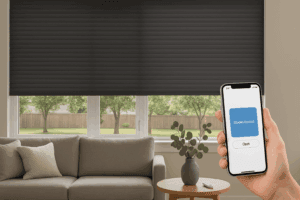
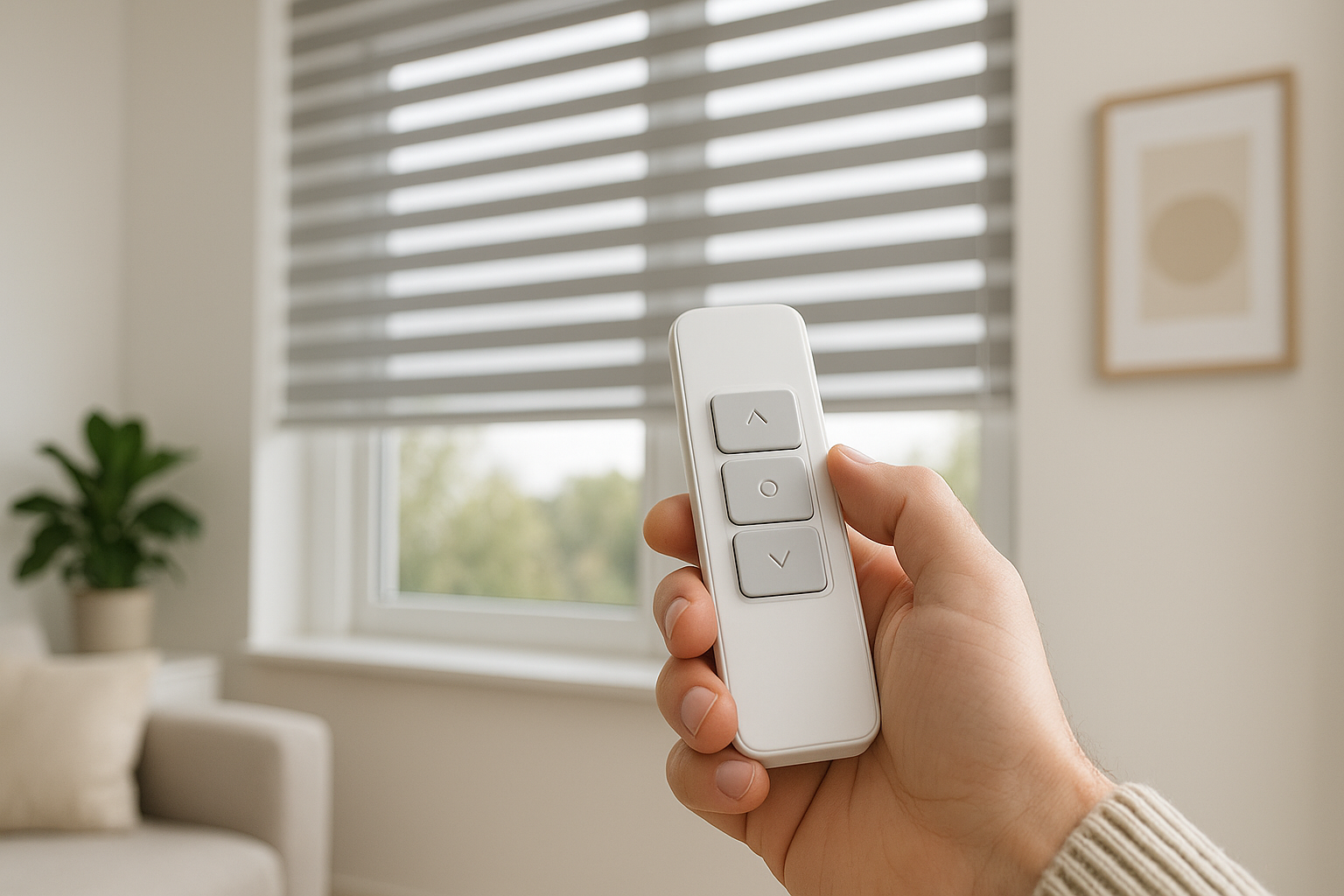
Basically, a tiny, ultra-quiet motor is hidden inside the roller tube of the shade. This motor connects to your Home’s Wi-Fi network or a smart home hub. You can control them with a remote, an app on your smartphone, or just your voice using systems like Amazon Alexa, Google Assistant, or Apple HomeKit.
We mix a bit of high-tech hardware with everyday convenience. For the tech-minded folks, these systems use communication protocols like Zigbee, Z-Wave, or Radio Frequency (RF) to talk to each other. Some of the best setups even use PoE. That stands for Power over Ethernet. A PoE system sends both power and data through a single standard network cable. It keeps the wiring incredibly clean and ensures your shades never lose connection.
But you do not need to understand the technical jargon to appreciate them. The short version is this: your shades go up and down precisely when you want them to, without you ever lifting a finger.
The morning routine: Waking up without the shock
Let’s talk about waking up. You know what is a terrible way to start the day? A blaring alarm clock going off while the room is pitch black. It jolts your system. It puts you in a bad mood right out of the gate.
Our bodies are naturally wired to wake up with the sunrise. It’s basic biology. By scheduling your Motorized Shades to slowly rise right around your wake-up time, you let natural light ease you into the day. It sounds like a small detail, but it makes a massive difference in how you feel.
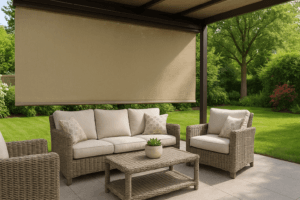
Plus, think about the windows you cannot easily reach. So many homes in Salt Lake City have those gorgeous, two-story vaulted ceilings with massive upper windows. Getting a ladder out to adjust a shade up there is just a terrible idea. With automation, those out-of-reach spots are finally manageable.
Energy efficiency: Keeping your utility bills in check
This is where the conversation usually shifts from “these are really cool” to “these are actually a smart investment.”
During a typical Utah summer, the afternoon sun beats down on the west-facing side of your house. The heat transfers right through the glass. Your air conditioner kicks into overdrive, working frantically to keep the house cool. Your energy bills go through the roof.
Automated shades fix this problem automatically. You can program your blinds to lower themselves the moment the afternoon sun hits those windows. You block the heat before it ever has a chance to warm up the room. In the winter, you can do the exact opposite. You let the sun stream in during the day to naturally warm the house, and then the shades automatically close at dusk to trap that heat inside.
Take a look at how standard treatments stack up against an automated system:
| Feature | Standard Manual Blinds | Automated Smart Blinds |
|---|---|---|
| Daily Effort | High (Adjusting room by room) | Zero (Runs on a set schedule) |
| Energy Savings | Low (Often left in wrong position) | High (Blocks sun automatically) |
| Hard-to-Reach Windows | Nearly impossible to adjust | Controlled with a simple tap |
When your window coverings work in tandem with your smart thermostat, they take a ton of pressure off your HVAC system. Over time, that saves you some serious cash.
Protecting your stuff from the harsh glare
People always forget about the damage the sun does to the inside of a home. UV rays are incredibly destructive over time.
Have you ever moved an area rug and noticed that the hardwood floor underneath is a completely different color than the rest of the room? Or maybe the fabric on the back of your favorite sofa looks bleached out? That is sun damage. And once it happens, it is permanent.
You cannot always be home to close the blinds when the sun gets too bright. But your smart home system can. Custom window shades equipped with sun sensors can track the light. If the glare gets too intense, the shades drop down to protect your floors, your artwork, and your furniture. It is like putting sunscreen on your house.
Safety first: A huge win for kids and pets
Let’s take a quick detour and talk about something really important. If you have toddlers, grandkids, or curious pets running around, safety is always on your mind.
Standard blinds have cords. Cords get tangled. Kids and pets get tangled in cords. It is a well-known hazard, and honestly, it is something parents worry about constantly.
Smart blinds are completely cordless by design. The motor handles the lifting and lowering. There is absolutely nothing hanging down for a cat to bat at or a toddler to grab. It brings a lot of peace of mind to a busy household. You cannot put a price tag on that kind of safety.
What about the workplace? Smart shades for businesses
We spend a lot of time talking about houses, but commercial spaces need smart solutions just as much.
If you run a business in the Salt Lake valley, you know how tough the glare can be in an office building. Employees are squinting at their computer monitors. Clients are sitting in conference rooms trying to watch a presentation while the sun shines directly into their eyes.
Having automated shades in a commercial space looks incredibly professional. When it is time for a meeting, you press one button. The projector screen comes down, the lights dim, and the shades quietly lower. It sets the tone perfectly. Plus, keeping the office cooler in July keeps your employees comfortable and productive. Nobody likes typing away in a sweaty, stuffy office.
The elephant in the room: How much do these actually cost?
Alright, let’s tackle the big question. Let’s talk about the money.
Are automated shades more expensive than traditional pull-down blinds? Yes. They absolutely are. You are paying for motors, Technology, custom Fabrics, and professional installation.
But you really have to look at them as a long-term investment in your property. Remember when smart thermostats first came out? People thought they were an expensive luxury. Now, nobody would dream of building a modern house without one. Smart window shades are following that exact same path. They add tangible value to your home.
The cost also depends heavily on how you decide to power them. You have a few different choices:
Battery-Operated Motors
These are usually the most affordable way to get started. A rechargeable battery sits inside the shade. You only have to charge them once or twice a year, depending on how often you move them up and down. They are fantastic for retrofitting older homes because you do not have to tear open the walls to run wires.
Hardwired Systems
If you are building a new house or doing a major remodel, hardwired is the way to go. The shades are wired directly into the electrical system of the house. You never have to worry about charging batteries. It is a seamless, permanent solution.
Solar-Powered Options
Some battery systems come with tiny solar panels that stick to the glass behind the shade. They constantly trickle-charge the battery using the sun. It is a brilliant, low-maintenance setup.
Let’s look at the pros and cons
To be completely fair, we should weigh both sides of the coin. No product is absolutely perfect for every single person.
- Pro: Ultimate convenience. Controlling your home’s lighting from your phone or with your voice is life-changing.
- Pro: Better sleep. Letting natural light wake you up improves your mood and energy levels.
- Pro: Energy savings. Blocking the heat in the summer and trapping it in the winter lowers utility bills.
- Pro: Improved safety. No cords means no hazards for kids and pets.
- Con: Upfront cost. The initial price tag is higher than manual blinds.
- Con: Reliance on technology. If your Wi-Fi goes down, you might temporarily lose app control (though you can still use manual remotes).
The installation process: Easier than you think
Sometimes people hesitate because they think getting smart shades installed is going to be a massive, messy construction project. Let me assure you, it really isn’t.
If you go with a battery-operated system, the installation is almost identical to putting up regular blinds. The brackets go up, the shade snaps into place, and then the magic happens during the programming phase. We sync the remote, connect the hub to your Wi-Fi, and set up your schedules.
Even hardwired systems are straightforward when handled by professionals. We work alongside electricians to make sure the wires are hidden cleanly behind the drywall. There are no ugly cords hanging down the wall. It looks sleek, modern, and completely integrated into the architecture of your room.
Are they for everyone?
Maybe you live in an apartment where you cannot change the window coverings. Or perhaps you have a single tiny window over the kitchen sink that rarely gets any direct sunlight. In those cases, a standard manual blind is probably just fine.
But if you have a home with beautiful, large windows, vaulted ceilings, or rooms that get baked by the western sun, standard blinds are holding you back. You are spending too much time adjusting them, and you are losing money on your energy bills.
Automated systems take a mundane chore completely off your plate. They protect your home, they lower your cooling costs, and they add a touch of everyday luxury that you will actually use every single day.
So, the final verdict: Are smart blinds worth it?
Yes. Without a doubt.
Once you live in a house where the shades open themselves to let the morning light in, and close themselves to block the blazing afternoon heat, you will never want to go back to pulling strings. It is one of those home upgrades that genuinely improves your daily quality of life. You stop worrying about the glare on the television. You stop worrying about your floors fading. You just get to live comfortably in your space.
If you are a homeowner or a business owner in the Salt Lake City area looking to modernize your space, taking the leap into automation is a decision you will not regret. They handle the hard work, so you can just enjoy the view.
Let’s get your windows sorted out
Ready to stop wrestling with your window treatments and finally take control of the natural light in your home? Give the local experts at PowerShades Utah a call today by phone # 801-518-5242 to discuss your specific needs. You can also visit our website or Request A Free Quote online to find out exactly how affordable upgrading your space can be.